
Blog
Deload week: the signs you need one and how to run it
Published July 14, 2026 · 14 min read
Most lifters treat a deload week as either a scheduled chore or something they never do. Both are guesses. A deload week is a planned, temporary cut in training volume and effort that lets accumulated fatigue clear, and the honest trigger for one is not the calendar. It is fatigue you can actually see in your training log: reps stalling, your effort creeping up at the same weight, targets you used to hit now slipping. Those same stalled numbers can also mean a stalled stimulus rather than fatigue, so if you are unsure why a lift stopped moving, first work out which kind of plateau you have, because a deload only fixes one of them.
This post covers what a deload week is, the real signs you need one, exactly what to change during the week, and how often to run it. The theme throughout is that a deload is a fatigue-management decision, and the cleanest way to make it is from your own logged numbers rather than a hunch. If you log load, reps, and reps in reserve for every set, the signs show up before a hard stall does, and running the deload is just dialing a few numbers down for a week.
What is a deload week?
A deload week is a short, planned period, usually about seven days, where you deliberately reduce your training volume and how hard you push, so your body can shed the fatigue built up over the previous weeks of hard training. You keep training. You just do less of it and take it further from failure, then return to normal loading the following week.
That is the whole idea. It is not a week off, and it is not an injury layoff. Think of it as easing off the gas so the engine can cool, not turning it off. You train the same movements, keep touching the weights so you do not lose the groove, and let the sets stop well short of the grind they usually end on. The point is to arrive at your next block recovered, not detrained.
Two things drive the fatigue a deload clears: total volume (how many hard sets you have accumulated) and proximity to failure (how close to your limit those sets have been). A deload reduces both at once, which is why it works.
What a deload week does, and what it does not
It helps to be honest about what a deload actually buys you, because the internet oversells it. A deload is not a growth hack. In a controlled study where trained lifters either took a one-week deload at the midpoint of a nine-week program or trained straight through, the deload group ended up with no meaningful difference in muscle growth and slightly less strength gain than the group that kept training (Coleman et al., 2024). Doing less did not add muscle on its own.
So why deload at all? Because that study forced a deload on schedule, whether the lifters needed it or not, over a fixed nine weeks. In real training that runs for months, fatigue accumulates until it starts eating your performance, and that is the situation a deload is built for. A short reduction lets fatigue fall faster than fitness, which is the same principle behind tapering before a competition: you feel and perform better on the other side. The mainstream view, reflected in expert consensus, is that deloading is a near-universal practice for managing fatigue across a long training career, even though direct evidence that it boosts hypertrophy is limited.
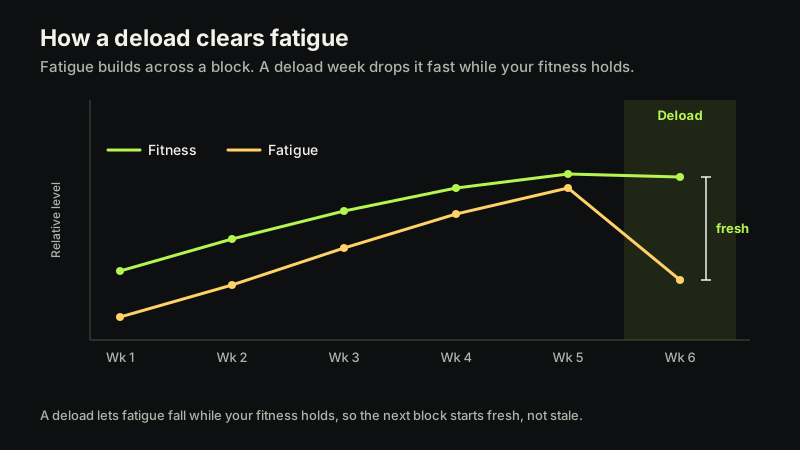
The practical framing: a deload does not make this week more productive. It makes the next several weeks more productive by clearing the fatigue that was quietly capping them. That is also why chasing failure on everything, week after week, backfires. The more of your sets end at a true limit, the faster fatigue piles up, which is part of the calculus in how hard each set should be.
Signs you need a deload week
This is the part most articles hand-wave, and it is the part that matters. You do not need a deload because a week ended. You need one when fatigue has accumulated enough to start dragging your performance and recovery down. The clearest signals live in your log, which is exactly why logging honestly is worth the small effort. The tell is usually a stretching recovery window: gaps between sessions that were comfortably enough in week 1 stop being enough by week 5, and why 48 hours is only a default explains what that drift is actually measuring.
Watch for these, especially two or three of them showing up together over a week or two rather than in a single bad session:
- Your effort is climbing at the same weight. You programmed a set at 2 reps in reserve, but it keeps coming in at 0. The load has not changed, yet the set feels maximal. That gap between your target RIR and your logged RIR is the earliest and most useful sign.
- Your reps are stalling or falling. Weights you used to get for 10 now stop at 8, across multiple exercises, not just one lift on one day. When your logged reps trend down at loads you owned two weeks ago, fatigue is the likely cause.
- You are missing rep targets broadly. One missed target is noise. Missing them across several movements in the same week is a pattern.
- Recovery feels off. Worse sleep, nagging joints and connective tissue, low motivation or a sense of dread before training, and a general heaviness that does not lift with a normal rest day. These are the classic markers of accumulated fatigue and functional overreaching. Soreness that keeps arriving from sessions which used to be routine belongs on this list too, though only as a supporting signal: soreness is a novelty detector rather than a scoreboard, so it counts here when your familiar work starts leaving you wrecked, not when a new exercise does.
- You have simply been going hard for a while. If you have run four to eight weeks of progressive, high-effort training without a break, you are in the window where a deload usually pays off even before the other signs get loud.
The through-line is that a deload is a response to a trend, not a mood. A single rough session after a bad night of sleep is not a deload trigger. A week where your weekly hard sets by muscle have been high and your logged reps and RIR are both drifting the wrong way is. When you can see the trend in numbers, the decision stops being a guess.
How to deload: what to actually change
Once you decide to deload, the mechanics are simple, and you have a few levers. Volume is the main one, because your accumulated weekly training volume is the largest source of fatigue. The expert consensus on deloading is to cut training volume as the primary move, with reduced intensity as a secondary adjustment, either by lowering the load or by stopping further from failure (Bell et al., 2023). You do not need to pull every lever. Cutting volume and easing off failure is usually enough.
Here is how a normal hard week compares to a sensible deload week:
| Lever | Normal training week | Deload week | Why |
|---|---|---|---|
| Sets per muscle | Your usual working volume | About half, roughly a 40 to 50% cut | Volume is the biggest source of accumulated fatigue, so it is the main thing to reduce |
| Proximity to failure | 1 to 2 RIR on most sets | 3 to 4 RIR, well short of failure | Training far from failure sharply lowers fatigue per set |
| Load on the bar | Your working weights | Keep 85 to 100% of them | Holding load preserves the movement pattern and prevents detraining; the lighter feel comes from fewer, easier sets |
| Exercise selection | Full menu, including accessories | Trim the extra accessory work, keep the main lifts | Fewer movements means less total fatigue while you still train the important patterns |
| Rep range | Your usual ranges | Roughly the same | The goal is less work at each session, not a different style of training |
The most common mistake is turning a deload into a light-weight, high-rep pump week. That keeps the volume and the burn, which is the opposite of what you want. The second most common mistake is dropping the load so far that the week becomes pointless. Keep the weights respectable, cut the number of hard sets, and stop your sets early. You should leave most sessions feeling like you could have done a lot more, because that is the point. Done right, a deload lets you keep adding load over time once you return, because the fatigue that was blocking progress is gone.
How often should you deload?
For most lifters, a deload lands naturally every four to eight weeks of hard, progressive training, and the expert consensus centers on roughly every four to six weeks for about seven days (Bell et al., 2023). But treat that as a default, not a law. The better approach is to autoregulate: let the signs above tell you when, and use the four-to-eight-week window as a backstop so you do not blow past a needed deload.
A few things shift the timing:
- Training age and volume. Advanced lifters running high weekly volume near failure accumulate fatigue faster and tend to deload sooner. A newer lifter using moderate volume can often go longer, sometimes much longer, before needing one.
- Life stress and sleep. Fatigue is not only from the gym. A stretch of poor sleep or high work stress can pull a deload forward.
- How close to failure you train. The more of your sets end at or near failure, the sooner you will want the reset.
A deload most often sits at the end of a training block, right before you start the next one with fresh loads and targets. If you plan your training in blocks, the deload is the built-in recovery step between them, which is covered in more depth in our guide on how a training block is structured and in this walkthrough of how a training week rolls up into a block. Planning it there means you are not waiting for performance to crater before you back off.
A simple deload week example
Say a normal week has you training chest with 16 hard sets across the week, most of them at 1 to 2 RIR, with a couple of accessory fly movements on top of your presses. A clean deload version of that week looks like this:
- Cut to about 8 hard sets for chest, roughly half.
- Keep your main pressing loads, or drop them by 5 to 10% if the joints want a break.
- Stop every set at 3 to 4 RIR. No grinders, no forced reps.
- Drop the isolation fly work for the week and keep the main presses.
Apply the same logic to every muscle. The session still looks like your training, the weights on the bar are still real, but you finish each one with plenty in the tank and far fewer sets than usual. After the week, you return to your normal volume and effort, and the loads that felt heavy before the deload usually move better, because you are no longer fighting a backlog of fatigue.
How to run a deload from your own log
Everything above depends on seeing your fatigue clearly, and that is where logging each set earns its keep. If your training lives in your memory or a messy notes app, the signs of accumulated fatigue are invisible until they become a hard stall. If you log load, reps, and RIR for every set, they show up as trends you can read.
RIRLift is built around exactly this. Because you log the actual load, reps, and reps in reserve for every set on your wrist, your history shows the two patterns that call for a deload: your reps drifting down at a given weight, and your logged RIR coming in lower than the target you planned. Previous-set numbers sit right in front of you as you train, so a set that should be a comfortable 2 RIR and instead grinds to a stop is obvious in the moment, not a vague feeling later. RIRLift also totals your hard sets by muscle across the week, so you can see when your volume has been high for a stretch, which is the context that makes the other signs meaningful.
Running the deload is just as concrete. You dial the routine down for the week: fewer sets, a higher RIR target so you stop further from failure, and the same or slightly lighter loads. You log the deload sets the same way you log everything else, straight from Apple Watch, so the week is still recorded and your history stays continuous. Doing all of this on the wrist keeps the session honest and phone-free, which is the same reason logging each set on your wrist beats reaching for your phone between sets. If you want the full picture of how a session runs from your wrist, that workflow is the same whether you are loading hard or backing off. When the week is done, you return to normal loading and let the fresh numbers confirm the fatigue has lifted.
A deload week is not complicated, and it is not a magic booster. It is a planned, temporary reduction in volume and effort, run when your log says fatigue has caught up with you, so the weeks after it can be productive again. Decide it from the numbers, cut the volume, ease off failure, and get back to training.
FAQ
What is a deload week?
A deload week is a planned, roughly seven-day reduction in training volume and effort that lets accumulated fatigue clear so you can keep progressing. You still train the same movements, but you cut your number of hard sets by around half and stop your sets well short of failure, then return to normal loading the next week. It is a recovery step, not a week off.
How do I know if I need a deload?
Look for a trend, not a single bad day. The clearest signs are your reps stalling or falling at loads you used to handle, your effort climbing so sets you planned at 2 RIR keep coming in at 0, and missed rep targets across several exercises in the same week. Poor sleep, nagging joints, and low motivation after a long stretch of hard training add to the case. Logging your reps and RIR makes these trends visible before they turn into a hard stall.
How often should you deload?
Most lifters benefit from a deload every four to eight weeks of hard, progressive training, with expert consensus centering on roughly every four to six weeks. Advanced lifters using high volume near failure tend to need them sooner, and newer lifters at moderate volume can often go longer. The best approach is to autoregulate off the signs of fatigue and use that window as a backstop.
Do you lose muscle during a deload week?
No. A week of reduced volume is far too short to lose muscle, especially if you keep your loads reasonably heavy and keep touching the main lifts. In a controlled study, a one-week deload did not reduce muscle size compared to training straight through. The small, temporary drop in how a weight feels is fatigue lifting, not muscle leaving.
Should beginners deload?
Beginners rarely need frequent deloads, because they train with less volume and further from their true limits, so they accumulate fatigue slowly. A newer lifter can often train for many weeks before a deload is worth it. The same rule still applies: if your reps and effort start trending the wrong way over a week or two, or life stress and sleep are working against you, an easy week will not hurt and will usually help.